


Oil on Canvas
30” x 40” – February 2018
Historically there were predictable periods of rain and dryness in La Guajira that followed equatorial weather patterns: there was the first dry season between December and April, followed by a short wet season from April to May, then an extended dry season from May to September and a final wet season from September to December. The Wayuu had local names for each of these seasons, with the main rainy season from September-December called “Juyapu.” Now these seasons are highly unpredictable, or do not exist at all. From 2012 to 2015, there was essentially no rain.
This kind of severe multi-year drought has predictable negative impacts on water availability and the well-being of wildlife, livestock, agriculture and the local populace. In La Guajira specifically, without rain, the jagueyes dry out, crops, cattle and natural flora and fauna die, and the Wayuu suffer. The cultural impacts on the Wayuu, who live by the rain and incorporate its presence into their beliefs and traditional practices, is less quantifiable, but also profound.
Desertification occurs on extremely degraded land, especially in drylands in semi-arid zones. Desertification is strongly connected to the extended droughts described above, and to unsustainable land use.
La Guajira is Colombia’s most rapidly desertifying region, for both of these reasons. The extended droughts and rising temperatures, the heavy use of the land for extractive industries, namely coal, and the damming of the principle waterways, makes “productive” use of the land all-but impossible.
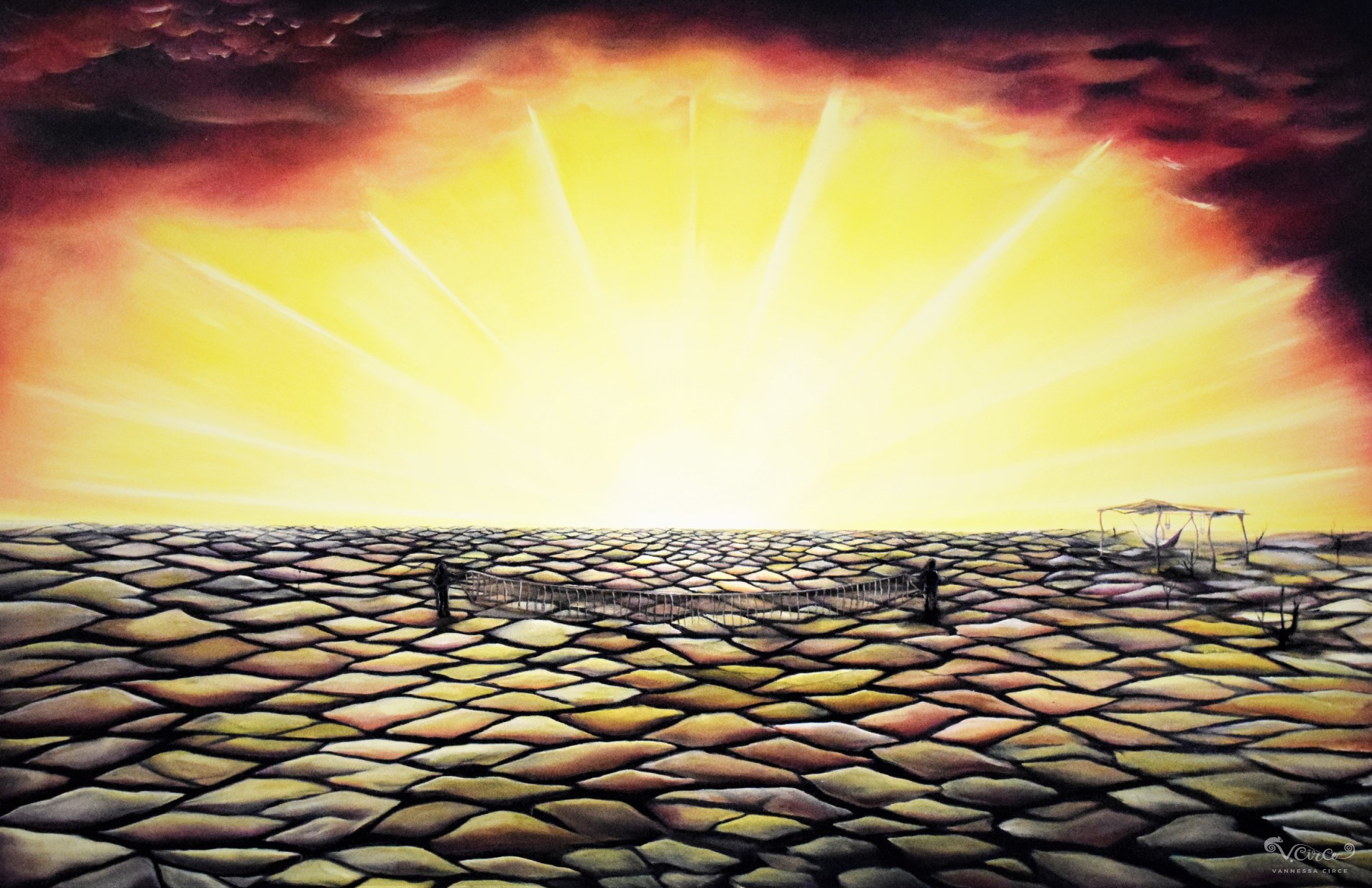
In this painting, the scorched territory of the Wayuu in La Guajira is depicted, with a desperate attempt by young Wayuu children to sustain themselves and their culture through blocking a road with an extended handmade “chinchorro.”



Leave a Reply